Showing posts with label Westonbirt. Show all posts

Monday, 22 July 2013

A Twist of Lime


Looking down the Main Avenue past the fountain,
with Sequioadendron giganteum, dating from 1855, on either side

Last week, myself and our propagator here at Westonbirt, Penny Jones, had the pleasure of visiting Cambridge University Botanic Garden. The purpose of our visit was to acquire cuttings from some of the Tilia (lime) species growing at the garden to propagate here for the collection Westonbirt.

Whilst we are holders of a Plant Heritage National Collection of hardy Tilia species, we currently do not have representatives of all the species that could grow with us and we are always seeking to improve the range of plants that we are growing here. There is a particularly good representation of the genus at Cambridge, owing in no small part to a former Director at the garden and Tilia specialist, Donald Piggott. His monograph on the genus was recently published, with a number of trees growing in the garden being of rare, wild sourced material, utilised in his study of lime trees.

This propagation work is also of benefit to Cambridge University Botanic Garden as from a conservation perspective it is important for these lesser grown plants to be distributed as widely as possible, while acting as an insurance policy against the loss of genetic material of their plants. We are grateful to those at Cambridge for affording us the opportunity to do this and, as always, it is great to engage with other collections for the benefit of all involved!

We arrived at the garden on Wednesday evening having visited a selection of supermarkets in the city on a quest for ice blocks for the cool bag - extras were required for safe packaging and transportation of the cuttings back to Westonbirt! Having met Tim Upson, the garden's curator, we wandered through the garden to visit some of the trees from which we were to take material from. Our visit coincided with one of the garden's summer concerts - talking trees with a jazz accompaniment on a warm July evening was a most agreeable experience!


Jazz at Cambridge University Botanic Garden
- one of the Sounds Green picnic proms

The first of the limes we were interested in was Tilia endochrysea, a species native to south-eastern China and considered a  primitive member of the genus. Discovered in 1918 but apparently absent from cultivation in western Europe and the USA until Donald and Sheila Piggott introduced it in 1993, the plant we were to obtain material from was derived from scion wood collected on that occasion. Growing well in a sheltered area of the garden, we were informed that it exhibits attractive reddish foliage in spring, a characteristic of this and other lime species (e.g T. henryana, growing with us currently), which will be a most welcome sight with us (we hope!) in due course!


Foliage of Tilia endochrysea

The next species we were keen to obtain material from was Tilia nobilis, another Chinese species, which was introduced from Emei Shan, Sichuan, by Roy Lancaster and Keith Rushforth, who collected scion material in 1980. The tree we were to take material from was derived from this introduction and conveniently for us, grows just next door to the specimen of T. endochrysea! A large leaved species, also with large inflorescence bracts, it would certainly make a welcome addition to the collection at Westonbirt!

Another specimen we were interested in was an example of T. platyphyllos. Native to much of Europe, including Britain, and while we grow a number of examples of this species, the particular  tree we were to take material from was used as the type specimen by Donald Piggott in his monograph on the genus and those at Cambridge are particularly keen to see this one grown more widely. We are grateful to have the chance to do so!

Returning to the garden the following morning, we visited a number of other limes which both parties would like to see propagated. Given the less vigorous growth on a number of these, Penny suggested it would be better to take material for grafting later in the year, as opposed to the cuttings taken of the aforementioned species.

Having a slightly hotter and drier climate than us, a number of tree species are more suited to growing in the conditions they are afforded at Cambridge, whilst some of the limes are less so, requiring damper conditions, as found with us here at Westonbirt! This is also a driver behind the Botanic Garden's desire to see these trees more widely distributed.


Beneath the crown of the champion Juglans major (labelled J. elaeopyron).
A tree appreciative of the Cambridge climate

Following a brief walk of other parts of  the garden, pausing to admire a number of the specimen trees (!), we then met up with Ian Barker, an Arborist at the garden, who was to assist in obtaining material from the trees in question. Using a pole pruner  in order to reach vigorous material up in the outer crown,  the required material was sensitively removed, then carefully packaged in the now adequately chilled cool bag, replete with newly purchased ice blocks!

Ian retrieving material from Tilia nobilis, as Penny packs it up

Having successfully obtained cuttings from each tree, we made our way back to Westonbirt, making full use of the air conditioning in the car (!), and once returned, tucked the cuttings away in the fridge overnight.

So on Friday, Penny and her volunteer assistant Chris, prepared the cuttings further, selecting the most suitable material and dipping them in rooting hormone, before getting them into pots. They were then transferred to space below the misting system, where they will stay for around 6-8 weeks, by which time they should have taken root, we hope! At this point, they will then be potted up and moved elsewhere on the nursery to continue their development.


Back at Westonbirt, Penny pops the cuttings,
dipped in rooting hormone, into pots


Then for the misting system!

It is hoped that in around two years, plants will be ready for planting in the ground, although success rates using these methods can be low so some losses are to be expected at an early stage. However, all being well (!), we should be able to increase the diversity of the collection here and of course, we intend to return some of the plants grown to Cambridge and in doing so, strengthen the collections held at both sites.
I shall endeavour to provide updates on the progress of these plants.... Watch this space!!

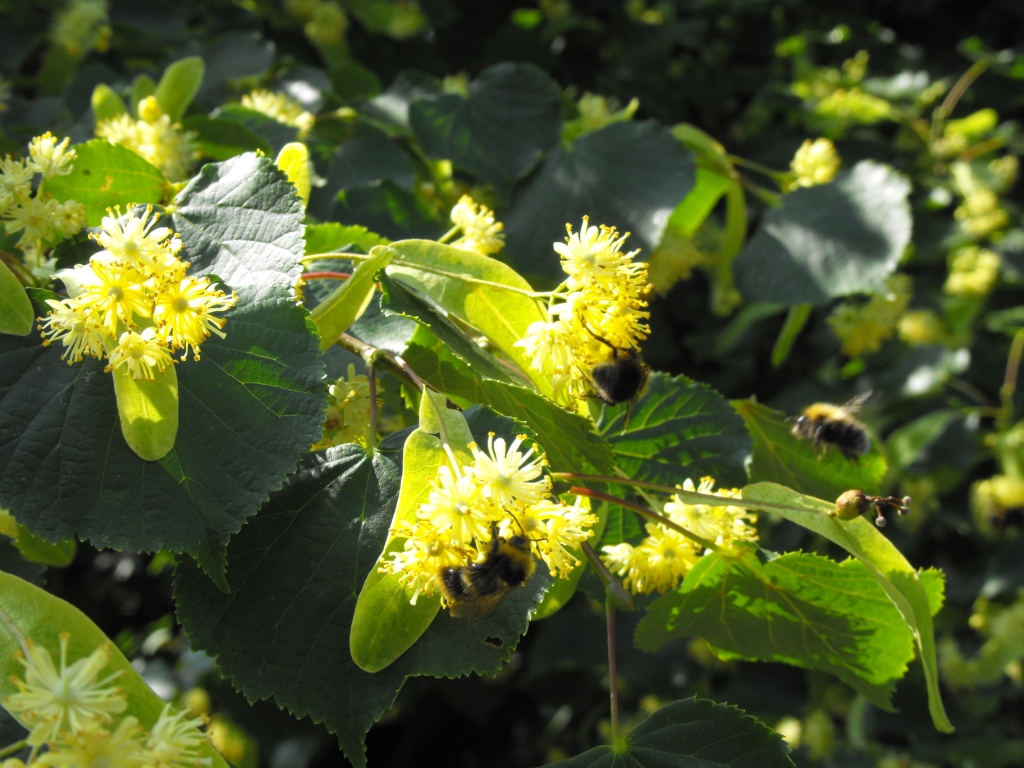
Bees enjoying the limes in the garden as much as we were!


Friday, 14 June 2013

An East Coast Favourite at Westonbirt - The Tulip Tree


For some visitors to Westonbirt, the tulip tree (Liriodendron tulipifera) is among the first trees they come across, with a maturing specimen growing on the borders of the current main car park. Others may notice a young specimen growing close to where a large Norway maple (Acer platanoides) once stood near Waste Gate at the entrance to Silk Wood, whilst those who make it as far as Jackson Avenue in the Old Arboretum will see the examples that make up part of the unique species combination of this avenue (the others are lime Tilia x europaea and cedar Cedrus atlantica, flanked by beech Fagus sylvatica and yew Taxus baccata). Numerous specimens are dotted around the collection, including a number of recent plantings from wild sourced seed.  

Liriodendron tulipifera is a member of the primitive Magnoliaceae and has just one other member of the genus for company, L. chinense (from China, as the name suggests!). The latter is more of a rarity at Westonbirt, with rabbits (who seem to be particularly fond of species in the Magnoliaceae) playing no small part in the demise of our mature specimens in recent years. We currently have just one specimen, located not far from Loop Walk in the Old Arboretum, but rest assured, new plants are on the way!

Introduced at some point in the mid to late 17th century, there are a number of venerable specimens of L. tuipifera around the country, but none have quite achieved the stature of those in the surviving old growth forests in its native range on the east coast of the United States, which I was privileged to see back in 2010 (courtesy of the Friends Of Westonbirt Arboretum). There, they attain heights of 120 feet and equally impressive girth (see photo below!) and are every bit as impressive as they sound.

A monumental wild specimen of L. tulipifera

Both species of Liriodendron are notable for their unusual leaf shape, which are four lobed with a broadly notched apex, appearing almost to have been cut. The leaves of L. chinense are ‘narrower waisted’ than those of L. tulipifera, offering a useful characteristic when distinguishing between the two. Both are also known for their tulip-like flowers, hence the specific epithet tulipifera of the American species. Our L. tulipifera aren't in flower just yet this year, but should be soon, so time keep a close eye on them! 

Slightly dull in colour, the flowers of the two species differ in size, with those of L. chinense being smaller, whilst also lacking the orange pigmentation present in L. tulipifera (see photo below). Our sole L. chinense is still a bit on the young side to be flowering quite yet. As well as flower and leaf characteristics, the Chinese tree also tends to attain a smaller size than its American counterpart, at least in cultivation. 

L.tulipifera flower

There is also a hybrid of the two found in cultivation, of which we have a fine example on Broad Drive in Silk Wood. Planted in 2002, it is intermediate in leaf characteristics of both parents and though again yet to reach the age where we would expect to see flowers, it is certainly showing plenty of hybrid vigour, so we shall eagerly watch this space!!

Liriodendron tulipifera x chinense leaf

Tuesday, 4 June 2013

A Rare Birch for Westonbirt

Returning from my recent visit to Stone Lane Gardens I was accompanied by a specimen of a rather rare birch – Betula ashburneri. The plant was a gift from Paul Bartlett, the Garden Manager at Stone Lane, for the collection at Westonbirt.

As described in the new Betula monograph, the species was ‘discovered’ in 1997 when on an expedition in south east Tibet, morphological differences were observed between the B. utilis at lower altitudes and those growing around the tree-line, by plant hunters Hugh McAllister and Keith Rushforth. Whereas lower altitude B. utilis tend to be single stemmed trees, those observed higher up were multi-stemmed bushes. Along with this difference in form, these high altitude specimens had smaller leaves with fewer veins than B. utilis as well as small, erect fruiting catkins. Whilst these plants could have been just a peculiar form of B.utilis, subsequent chromosome counts established them as genetically distinct. Examples of B. ashburneri were also found in cultivation from an earlier collection of B. utilis, along with a possible hybrid of the two. The species is named after the late Kenneth Ashburner, creator of Stone Lane Gardens and co-author of the aforementioned (and excellent!) monograph.

A number of young examples of B. ashburneri growing  in a grazed area at Stone Lane,
complete with  alder catkins from a neighbouring tree, if you can spot them!

The specimen I acquired has been potted on since its arrival at the propagation unit here at Westonbirt and currently resides in an air-pot, as do virtually all other plants on our nursery. The somewhat knobbly design of these pots (see image below!), with air holes and a perforated base, discourages root spiralling and encourages fibrous growth as roots grow outwards, finding their way to these air holes, where they then dieback (or are ‘air-pruned’), stimulating further growth behind the tip. A mass of roots results, with no need for any ‘teasing out’ during  planting, whilst we also find our trees establish quicker. Can’t wait to see this one out in the collection!

B. ashburneri, in an air-pot on the nursery at Westonbirt


Tuesday, 28 May 2013

Something (sort of) New to Look Out For


Visitors to Westonbirt may not yet be familiar with Taiwania cryptomerioides growing with us – in recent years there was a specimen growing close to the Forestry Commission offices but this succumbed following a combination of cold winters and dry springs, having been planted in thin soil in this area.

Now two young examples have been added to the collection. One of these is from wild sourced seed collected in 1993 by the Taiwan Forest Research Institute, which found its way to us via our colleagues at Bedgebury, whilst the other was a gift from Trellisick Garden in Cornwall.

One of the new specimens in the collection


Taiwania cryptomerioides is a monotypic conifer in the Cupressaceae, having previously been included in the now defunct Taxodiaceae.  Whilst it bears some resemblance to a number of other genera in its family (its specific epithet denotes the likeness of the juvenile foliage to the mature foliage of Cryptomeria japonica), DNA studies have illustrated that it is closely related to none. Consequently it sits alone as sole member of the subfamily Taiwanioideae.

Juvenile foliage of T. cryptomerioides

The species is native to the mountains of central Taiwan, parts of China and neighbouring Myanmar and a recently discovered (and Critically Endangered) population in northern Vietnam. The Taiwanese trees have been thought of by some to be a distinct species (T. flousiana) but authorities state that close comparison of these trees with those of mainland China reveal no consistent differences in morphology. In its native range it attains heights of 60 metres and is aptly described by some as the ‘Asian redwood’. It has attained far more modest sizes in cultivation in Britain so far but is undoubtedly one to look out for!

Although having been introduced to Britain in 1920, the records show only one specimen having been planted at Westonbirt until the aforementioned deceased specimen in 1997. This first planting was in 1941 in the area now known as Savill Glade and although we have no date of it being removed, it definitely isn’t there now! What can be said about the recently lost specimen is that it attained a respectable size in the 15 years it was growing with us so we are hopeful that the new additions will make an impact (and last quite a bit longer than that!). They are located on moist soils in the Old Arboretum on Specimen Avenue – a ride dominated by conifers, so they should fit right in!